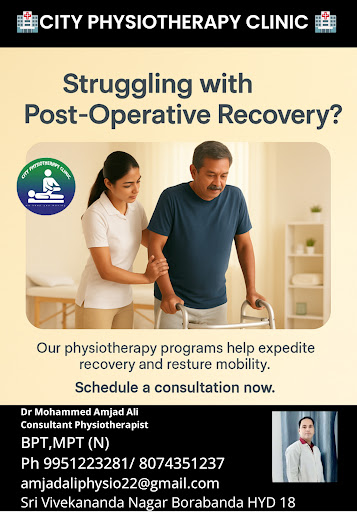
Physiotherapy after surgery is very important for recovery, healing, and regaining mobility. The…
Physiotherapy after surgery is very important for recovery, healing, and regaining mobility. The goals and methods depend on the type of surgery, but here’s a general overview:
🔹 Importance of Physiotherapy After Surgery
1. Pain Relief – Helps reduce post-surgical pain and swelling.
2. Improved Mobility – Restores movement in the operated area.
3. Strength Recovery – Rebuilds muscle strength lost due to surgery or immobilization.
4. Prevention of Complications – Reduces risk of stiffness, contractures, or blood clots.
5. Faster Healing – Promotes circulation and tissue healing.
6. Return to Daily Activities – Helps you regain independence and confidence.
🔹 Common Surgeries Where Physiotherapy Helps
Orthopedic surgeries (knee replacement, hip replacement, fractures, spine surgeries)
Cardiac surgeries (open-heart surgery, bypass)
Abdominal surgeries (hernia repair, C-section, etc.)
Neurological surgeries (spinal cord or brain-related procedures)
🔹 Typical Physiotherapy Approach After Surgery
1. Early Stage (Day 1–2 onwards, as advised by doctor)
Breathing exercises to improve lung capacity
Gentle movements to prevent stiffness
Pain management techniques (ice, heat, TENS)
2. Intermediate Stage
Gradual strengthening exercises
Stretching and flexibility training
Gait training (if leg surgery) or functional training for daily activities
3. Advanced Stage
Balance and coordination exercises
Endurance training
Return-to-work or sports-specific